
Warm lake temperatures are ripe for blue-green algae clusters
NewsSocials | Published on August 20, 2026 at 3:33pm EDT | Author: Kendall Koenen
0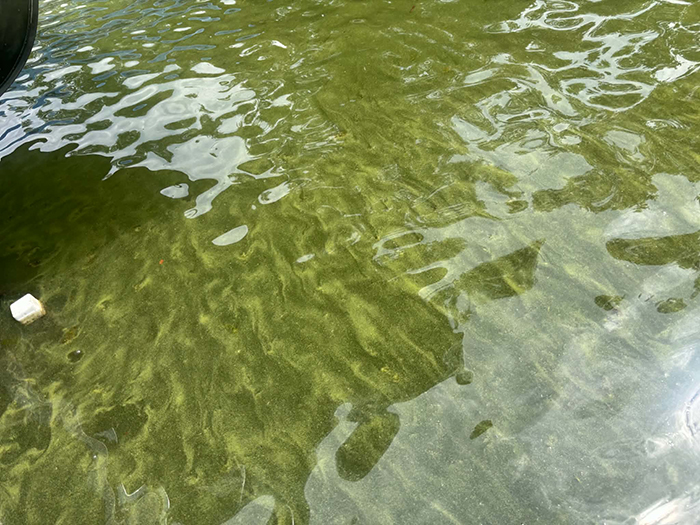
The picture is one of several shared on Facebook by a user questioning the presence of blue-green algae on West Leaf Lake. Though there were no confirmed cases of the toxin in the lake, it did spark quite a bit of discussion online. The Minnesota Pollution Control Agency said blue-green algae is common in lakes, but it can cause sickness or even death when it is found in high concentration.
By Chad Koenen
Publisher
A Facebook post last month sparked quite a bit of debate online about the water quality and safety on West Leaf Lake in rural Henning. The post questioned the presence of blue green algae on West Leaf Lake. While no confirmed lab reports have been found for West Leaf Lake, representatives from the Minnesota Pollution Control Agency stated that warm and dry conditions this summer have created a breeding ground for toxins in lakes across the state.
According to Lee Engel of the MPCA, blue green algae is in just about every body of water throughout the Midwest and the state of Minnesota. He said there is a concern when there is a large concentration of blue green algae in one specific area, which can in turn, create a greenish color to the water that could be deadly to pets, livestock and humans as well.
“It’s a concentration thing and what people notice is the green coloration,” he said. “If there is no algae present the water is going to look clear.”
Blue-green algae forms when temperatures climb and the summer sun beats down on the water. Add in the fact that there has been little-to-no-significant rain throughout the summer, and conditions are ripe to form blue-green algae on lakes throughout the state. Ironically, blue-green algae is not an algae at all, but is a type of bacteria called cyanobacteria. It is normally present in bodies of water and is common throughout Minnesota
This type of bacteria thrives in warm, nutrient-rich water. When conditions are right, the blue-green algae can grow quickly forming “blooms.” Certain varieties of blue-green algae can produce toxins that are linked to illness in humans and animals.
“The tough thing is there is not a quick and easy way to tell if the bloom is actually toxic or not,” he said. “That is why our recommendation is kind of a catch all of ‘when it doubt stay out.’”
Engel went on to say that conditions regarding blue-green algae can change quickly, meaning a rainfall or change in wind direction can make the difference between safe and unsafe water conditions. For example, if rain cools the temperature of the lake, or a strong wind spreads out the concentration of the blue-green algae, conditions that were once unsafe could become safe in the matter of hours.
Blue-green algal blooms are often described as looking like pea soup or spilled green paint. However, blooms aren’t always large and dense and can sometimes cover small portions of the lake with little visible algae present. Blooms can also produce a swampy odor when the cells break down.
“We have had some extremely hot weather for the past few weeks so the conditions are probably right for the lakes to have blooms so I am not surprised we have been seeing a number of blooms across the state,” said Engel, who added it is a good time of year to be informed about the potential dangers of blue-green algae even if conditions can change quickly. “This is the time of the year we expect these blooms because it is the hotter water temperatures between July and September.”
Engel said if the water appears green it could indicate the presence of an algae, but if the lake water is clear it should be safe to swim in for humans. The biggest challenge for the MPCA and people in general, is that people can’t simply tell by looking at a bloom if it is harmful or not and most blooms are not toxic to humans. According to the MPCA, most blue-green algae blooms prefer warm, calm, sunny weather and water temperatures high than 75 degrees Fahrenheit. Blooms usually occur during summer and early fall, but can occur other times of the year, if conditions are right.
Harmful algae can be found everywhere in Minnesota, but thrive in warm, shallow, nutrient-rich lakes. They will often be found on the downwind side of a lake or in a secluded bay or shoreline.
Individuals can become sick if they swallow, have skin contact with, or breathe in airborne water droplets while swimming, boating, water skiing, tubing, bathing, or showering in water that has harmful algae or if they drink water that contains algal toxins. Those who become sick, might experience vomiting, diarrhea, rash, eye irritation, cough, sore throat, and headache. Symptoms generally begin hours to two days after exposure. Engel said one of the biggest concerns when blue-green algae is present is pets who will still drink discolored water, while humans typically shy away from drinking water that looks green.
“The bigger concern is the pets that don’t have that ability to think I shouldn’t drink this water and that is where they kind of get into trouble,” said Engel. “You definitely don’t want to ingest it because that is the way the toxins enter your body.”
Engel said it is important for people to know the dangers of blue-green algae, but to also understand that if the water looks clear it should be safe to go into for area residents. He also stressed the importance of trying not to ingest too much lake water even if it does appear clear as that could lead to sickness as well. He said if people do wade or swim in the presence of blue-green algae, but they do not consume any of the water, they could develop a slight rash where the skin came in contact with the toxin. He went on to say that even if the toxin is present one day it doesn’t mean the water won’t be safe the following day if conditions change.
Since there is no way to tell if a blue-green algae bloom is toxic just by looking at it, the MPCA recommends avoiding contact with the water with a green scum. If a person believes a specific body of water is in the presence of blue-green algae there are simple at-home tests they can do to see if it’s present, although the test will not verify if it is toxic.
There is also an app located at www.cyanos.org/bloomwatch/ that individuals can use to see if there is blue-green algae present.
Individuals who believe they have seen a bloom should utilize the app or contact the MPCA or local invasive species representatives.
The MPCA has two tests people can use to test for the presence of blue-green algae, although neither will tell people if blue-green algae is toxic or not.
The first test is a jar test and individuals will need a clear pint to quarter size jar with a screw top lid (like a canning or pickle jar), as well as rubber or latex gloves. Individuals should collect a sample of water just below the surface (avoid collecting just the top layer of scum). Fill the jar about 3/4 full and wipe off any scum on the outside of the jar. Screw the jar lid on and put the jar in the refrigerator over night.
The next day take the jar out of the fridge without shaking or agitating the jar.
If the algae settled near the bottom of the jar it is likely the lake does not have blue-green algae, but if the algae formed a green ring near the top of the jar there is a strong possibility that the lake does have a blue-green algae community.
Another test involves sticking a long sturdy stick into the green scum on the top of the lake. Slowly take the stick out of the water and if the stick looks like a can of paint the material is likely blue-green algae. If the stick comes out with green strands like hair or threads, the material is probably filamentous green algae, which may be a nuisance but is not a health hazard.
Engel said even though MPCA is not aware of any blue-green algae outbreaks near West Leaf Lake, it is important for people to know the danger and risk of blue-green algae, while also enjoying Minnesota lakes during the summer months when the water is clear and cool.
For more information about blue-green algae, visit the MPCA website online.