
New study identifies housing needs in greater Henning area
News | Published on January 13, 2026 at 12:02pm EST | Author: henningmaster
0Henning EDA to host public information meeting on Jan. 22 about new study
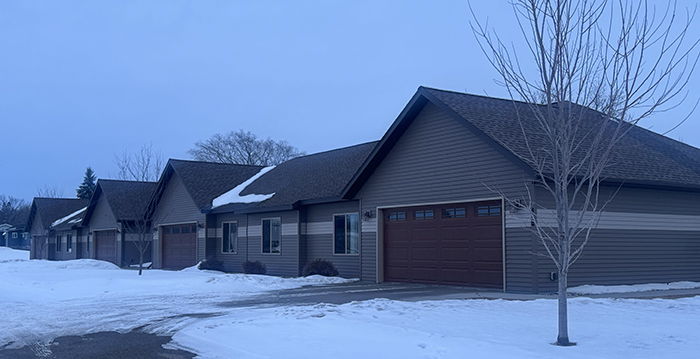
A new housing study has identified a need for additional housing in Henning. Some of the findings include the need for additional single story homes like ones completed in near the city hall a few years ago.
By Chad Koenen
Publisher
Ask any small community in rural Minnesota about their biggest needs and chances are the topic of a lack of affordable housing and daycare would be near the top of that list. The same is true for the city of Henning, but rather than sit ideally by and not do anything about the lack of housing and daycare, the Henning EDA has taken a proactive approach of proving the overall need for additional housing, daycare and jobs in the community as part of an expansive 76 page study looking at the overall wellbeing of town.
The new housing study, which was completed at the end of 2025, came after the Henning EDA heard about the success and useful information that were identified in a similar study recently completed in both Parkers Prairie and Pelican Rapids.
Henning EDA President Andy Eckhoff said both communities spoke highly of the information they received from the housing study and how it is helping them plan future housing projects in their communities.
“We caught wind that a few of our neighboring communities have done them and found success with them,” said Eckhoff.
The study began last year when the Henning EDA sought help from representatives from Community Economic Development Association (CEDA) to complete a housing study. In developing the study, representatives from CEDA spoke with community stakeholders, community members, business owners and representatives from the city as a whole to get a larger picture of the city of Henning.
While a lot of the study reinforced what Henning EDA and city representatives already knew was needed in the community, Eckhoff said one of the more surprising findings from the study was the increase in population from 2013-23. Even though the number of retirees increased during that 10 year span, which wasn’t surprising due to the overall age of the community, one rather surprising fact was the dramatic increase in people ages 25-54. According to the study, people in that critical age range increased faster than the amount of retirees in town with the median age now 47.6, which is significantly lower than the 2013 median age of 55.8.
Eckhoff said any increase in population is critical to the future of Henning, but having such an increase in people ages 25-54 is important as they typically have kids who attend school and are at the age where they will be working both in the community and abroad.
“Other small communities would be thrilled to hear 25-54 is increasing faster than our retirees. We need everyone, but that is great,” said Eckhoff.
The overall population of Henning has also seen a dramatic increase and is similar to the population in 1970. After falling from a population of 850 in 1970 to just 719 in 2000, Henning has seen a dramatic increase in population and is currently at 846 residents. That is projected to hold steady through 2030 at 845 people.
The expansive study is 76 pages in length and touches on just about every aspect of the community from housing, workforce, population and goals for the future. As a whole, Eckhoff said he was pleased with how the study turned out as CEDA seemed to be honest in its assessment of the community in identifying Henning’s strengths and weaknesses.
“I am pleased with what we got back,” said Eckhoff. “They were honest and they identified some of our weaknesses.”
Among the weaknesses for future development in Henning that was identified in the study was very few developable lots, which means there are not many lots in the city that either have utilities readily available or would not take some work to get the lots ready to develop for a new housing project.
The study also found there were no large employers, or manufacturing employers that require a large workforce. One of the largest employers is the school. Other weaknesses include a lack of local job opportunities and limited childcare options.
While the weaknesses are something the community will need to work on over time, the study also identified a number of strengths in Henning, including a strong sense of community, excellent school, high quality of life and reliable emergency services (fire, police and ambulance).
“We have a lot more things going for us than I think we give ourselves credit for,” said Eckhoff.
In addition to identifying strengths and weaknesses in the community, the study made six recommendations for how to move forward between the years 2025-30. The goals are set up to be accomplished by either private investors or the community as a whole.
Among the goals were having five first time home buyers, constructing six patio homes, constructing 10 rental housing options, develop an owner occupied rehab program, develop a rental occupied rehab program and demolish dilapidated units in the community.
Eckhoff said the goals are fairly lofty for a town the size of Henning, but agreed that many of the goals set forth by the study are attainable with some hard work and a vision for the future.
“I’ll admit the recommendations, these are lofty, but I think goals should be,” said Eckhoff. “If we achieve half of this stuff I think it would be great for Henning.”
For example, Eckhoff said he thinks interest rates will keep going down, which could make it more affordable for investors and developers to complete an expansive building project in town. Recently, several patio homes were constructed near the City of Henning offices and could be a template of future projects in town by a private developer. Having a new housing study could help to show figure developers of the overall need in the community, combined with lower interest rates, which could make completing another project in town more appealing.
One of the real benefits of the study will be the ability to show investors and developers of what future housing and additional businesses are needed in the community. Having a housing study will provide real research and data to show the need for additional housing by an outside company, as opposed to just taking a city’s word for what they think is needed.
The study could also give Henning a leg up when seeking additional grants in the future to address things like housing and daycare shortages. Since grants are becoming even more competitive and difficult to get, Eckhoff said having the housing study will also give Henning an advantage in showing there is a need in the community and willingness to be proactive in addressing a large housing shortage.
“We can’t just expect investors and developers to come in and build a house. It is not going to happen. So we have to own part of that,” said Eckhoff of having the EDA take an initiative to spur future development. “We need to show them how great Henning is.”
In order to go over the housing study with the overall community, as well as CEDA which completed the expansive study, the Henning EDA will be hosting a community information meeting on Thursday, Jan. 22 at 6 p.m. at the Henning Community Center.
Eckhoff said the meeting is not a city council or Henning EDA meeting and is meant for all community members, businesses or any future developers to attend, hear about the study and ask CEDA any questions they may have about the housing study and how to move forward. The goal is to answer any questions and begin brainstorming about how to move forward with the future development of town.
Copies of the study are available to pick up prior to the community meeting by stopping by Eckhoff’s office at My Kind of Bank in Henning or the City of Henning office. By having the housing study available ahead of time the hope is people can come ready to ask questions about some of the findings of the study to representatives from CEDA at the community meeting.